
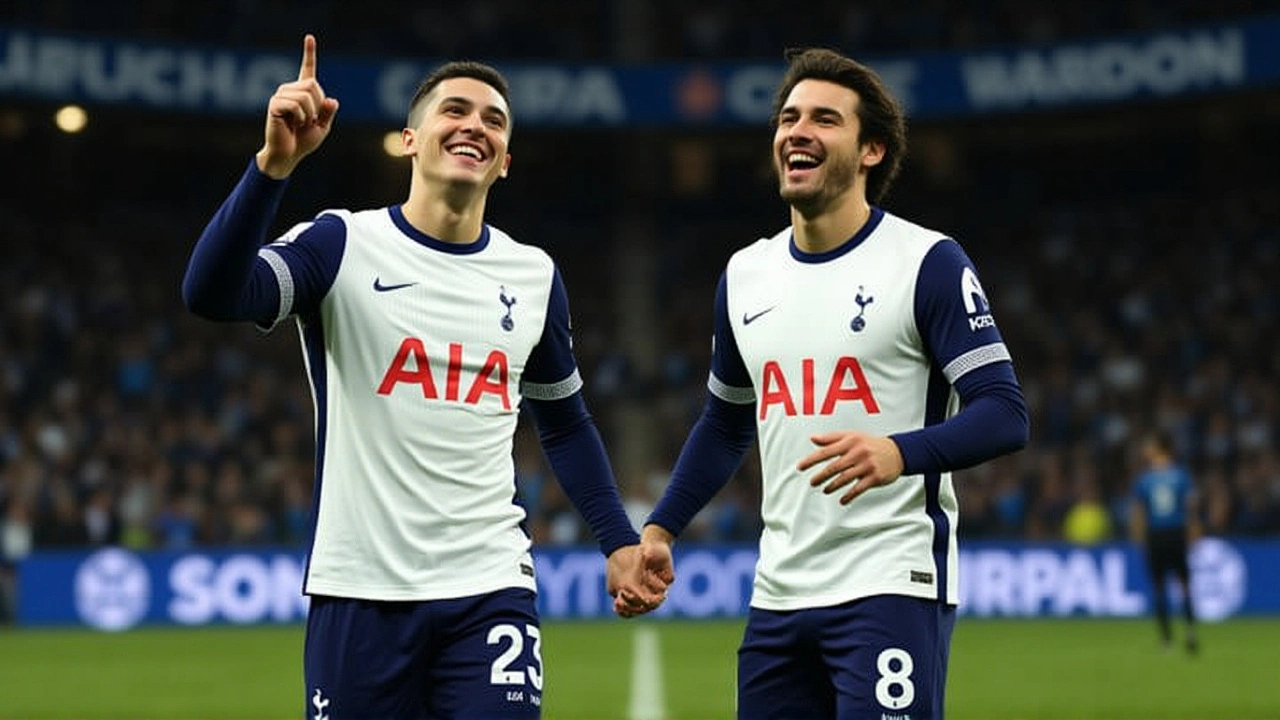
On Thursday, November 27, 2025, the 2025/26 UEFA Europa League reached its dramatic midpoint as six high-stakes matches unfolded across Europe, turning the league phase into a genuine survival race. With kickoffs at 18:45 CET, fans in Rome, Birmingham, Porto, and Istanbul watched as teams scrambled for top-eight positions — the only guaranteed ticket to the round of 16. Europa League fans know this isn’t just another midweek fixture; it’s the final stretch before winter breaks reset momentum, and every point could mean the difference between a comfortable knockout draw and a brutal play-off gauntlet.
The Night That Rewrote the Race
At the Stadio Olimpico in Rome, AS Roma edged out FC Midtjylland 2-1 in a match that had fans on the edge of their seats until the final whistle. Romelu Lukaku’s 78th-minute header — his fourth goal in three Europa League games this season — sealed the win, keeping Roma in the top five. Meanwhile, at Villa Park in Birmingham, Aston Villa stunned BSC Young Boys 3-0, with Ollie Watkins scoring twice in the first half. The result sent Villa climbing to seventh — their highest league phase position since 2022.
But the real shock came in Bologna. Bologna FC 1909 dismantled RB Salzburg 4-1, with 21-year-old striker Nicolò Zaniolo netting a hat-trick — his first in European competition. The win vaulted Bologna into the top four, a position they hadn’t held since the 1980s. "This isn’t luck," said manager Davide Nicola after the match. "We’ve built something here. The fans believe. The players believe. Now the league believes too."
Who’s Hanging On? Who’s Falling Behind?
The table tells a story of momentum. FC Porto held on for a 1-1 draw with OGC Nice in Portugal, a result that left them in 11th place — dangerously close to the play-off cutoff. Meanwhile, Fenerbahçe SK lost 2-0 to Ferencvárosi TC in Istanbul, a result that dented their top-eight hopes and sparked protests from 3,000 fans outside the Şükrü Saracoğlu Stadium after the final whistle.
And then there was the brutal, unexpected thrashing in Razgrad. Ludogorets Razgrad crushed Celtic FC 4-1, with 19-year-old winger Todor Nedelev scoring twice. It was Celtic’s third straight defeat in the league phase — a nightmare scenario for a club that once dominated this competition. "We’re not just outplayed," said Celtic captain Callum McGregor. "We’re outclassed. And that hurts more than losing."
The Format That Changed Everything
This is the second season of UEFA’s 36-team league phase — a radical shift from the old group stage. Gone are the days of three predictable opponents. Now, each team plays eight different rivals, home and away, randomly drawn. The top eight advance directly. Ninth through 24th enter a two-legged play-off. The bottom 12? Out. No Europa Conference League lifeline. No safety net.
It’s a format that’s rewarded consistency over star power. Sevilla FC, the record seven-time winners, didn’t even qualify. Neither did Manchester United FC or FC Barcelona. Instead, it’s clubs like Bologna, Ludogorets, and Midtjylland — teams with leaner budgets but sharper tactics — who are rewriting the script.
Attendance figures back it up. According to UEFA’s November 2025 report, over 2.8 million fans packed stadiums across the first four matchdays. That’s a 17% increase from last season. The league phase isn’t just bigger — it’s better. More drama. More unpredictability. More reasons to care.
What Comes Next? The Winter Clock Is Ticking
Matchday 6 arrives on December 11, 2025 — the final stretch before the winter break. BSC Young Boys host Lille in Bern. FC Midtjylland face Genk in Denmark. And Ferencvárosi TC take on Rangers in Budapest — a match that could decide whether the Hungarian champions stay alive.
After the break, Matchdays 7 and 8 come fast: January 22 and 29, 2026. Then, the knockout round play-offs on February 19. The final? May 20, 2026, at Beşiktaş Park in Istanbul — a fitting stage for a competition that’s never been more wide open.
Why This Matters Beyond the Table
This isn’t just about trophies. It’s about money. The top eight clubs each earn at least €15 million in prize money. The ninth-place team? Just under €8 million. That gap funds youth academies, transfers, infrastructure. For clubs like Bologna or Ludogorets, a top-eight finish could mean the difference between sustainable growth and financial stagnation.
And for fans? It’s the return of unpredictability. No more guaranteed group-stage exits. No more "we’ll just be happy to be here." This is a league where even the smallest club can topple giants — and often does.
Frequently Asked Questions
How does the 36-team league phase affect smaller clubs like Ludogorets or Midtjylland?
The expanded format gives clubs from smaller leagues eight guaranteed matches against top-tier opposition, significantly increasing their revenue and exposure. Ludogorets, for example, earned over €12 million in prize money from Matchdays 1–5 alone — more than their entire 2024–25 domestic budget. This financial boost allows them to retain key players and invest in youth development, making them competitive year after year.
Why didn’t Manchester United or Barcelona qualify for the Europa League?
Both clubs finished outside the top four in their domestic leagues and failed to progress through the Champions League qualifying rounds. With only the top eight from each of Europe’s top five leagues (England, Spain, Italy, Germany, France) qualifying directly for the Champions League, and only the ninth-placed teams dropping into the Europa League, United and Barcelona missed the cut entirely — a rare occurrence for both.
What’s the financial difference between finishing 8th and 9th in the league phase?
Finishing 8th guarantees €15 million in base prize money, plus a €1.5 million bonus for reaching the round of 16. Ninth place receives just €7.8 million — a 50% drop. That’s a €7.2 million gap that can fund two major transfers or a new training facility. For mid-tier clubs, this isn’t just a ranking — it’s survival.
When is the Europa League final, and where is it being held?
The 2026 final will be held on Wednesday, May 20, 2026, at Beşiktaş Park in Istanbul, Turkey. It’s the first time the final will be held at this venue, replacing the traditional neutral-site model. UEFA chose Istanbul to celebrate the city’s rich football history and its role as a bridge between Europe and Asia.
How many teams qualify from each country for the Europa League league phase?
The top five leagues — England, Spain, Italy, Germany, and France — each have three representatives. The next five leagues (Portugal, Netherlands, Belgium, Ukraine, Austria) get two. Smaller associations like Denmark, Czech Republic, and Bulgaria each have one. In total, 28 national associations are represented, making this the most geographically diverse Europa League in history.
What’s the timeline for the rest of the 2025/26 Europa League season?
Matchday 6 is December 11, 2025. After the winter break, Matchdays 7 and 8 are January 22 and 29, 2026. The knockout round play-offs run February 19–26, 2026. Round of 16: March 12–19. Quarter-finals: April 9–16. Semi-finals: April 23–30. Final: May 20, 2026, at Beşiktaş Park in Istanbul.
Danny Johnson
December 12, 2025 AT 07:23Man, this Europa League season is wild. I’ve watched every matchday and I can’t remember the last time the table looked this unpredictable. Bologna with a hat-trick hero? Ludogorets crushing Celtic? This is football at its purest - no superclubs, just grit and guts.
Mona Elhoby
December 13, 2025 AT 01:34oh wow so now even bologna is a ‘football dynasty’?? 😂 like the same team that used to struggle to keep their stadium lights on? i mean sure, zaniolo’s good… but don’t act like this isn’t a fluke. the format’s rigged to give tiny clubs 8 games vs giants so they can cash in and vanish by june. capitalism in cleats.
Crystal Zárifa
December 14, 2025 AT 19:56you know what’s beautiful? that no one’s really in control anymore. no big club can just buy their way to the top-eight. it’s like watching a chess game where every player just threw their pieces in the air and let gravity decide the winner. i’m here for it.
Serena May
December 16, 2025 AT 17:50ludogorets 4-1 celtic? 😳 someone’s got a leak in the scouting department. this isn’t football. it’s a corporate sponsorship scam.
Christine Dick
December 18, 2025 AT 16:17It is truly lamentable how the sanctity of European football has been eroded by this chaotic, financially-driven structure. The very notion that a club like Bologna - a team with no historical pedigree in continental competition - can now claim parity with giants is not only statistically absurd, but morally corrosive. Where is the merit? Where is the tradition?
Jullien Marie Plantinos
December 20, 2025 AT 06:16oh please. america doesn’t even have a proper league system and you’re crying about Bologna? you think the EPL is sacred? look at how many times man city got lucky with VAR. this format’s fair. if you can’t handle 8 different opponents, go play in the MLS.
Jason Davis
December 20, 2025 AT 15:29what’s wild is how many countries are represented here - from Bulgaria to Denmark to Serbia. this isn’t just football, it’s global culture colliding on the pitch. i’ve seen kids in rural India wearing Ludogorets jerseys now. that’s power. that’s change.
Cheryl Jonah
December 21, 2025 AT 12:06the whole thing’s a deep state operation. uefa knew bologna would win and planted zaniolo in the academy. they’ve been manipulating the draw since 2023. why do you think midtjylland keeps getting paired with roma? coincidence? i think not.
James Otundo
December 22, 2025 AT 03:11you people are so naive. this isn’t about football - it’s about market expansion. uefa wants to monetize the Balkans and Eastern Europe. that’s why ludogorets and bologna are ‘rising.’ they’re just puppets in a €2 billion ad campaign. the real winners? the streaming platforms.
Sarah Day
December 24, 2025 AT 02:59i just love that people care this much. even if you hate the format, you’re still watching. that’s the win.
ryan pereyra
December 25, 2025 AT 05:13the 36-team league phase is the epitome of dilutionary capitalism. you’ve replaced elite competition with a bloated, algorithmically generated spectacle. the aesthetic is now a corporate product - think: ‘football as a SaaS subscription.’ the emotional resonance? obliterated. the soul? sold to the highest bidder.
Jane Roams Free
December 26, 2025 AT 14:42you know what’s cooler than winning? seeing a 21-year-old kid from a town of 100,000 score a hat-trick in front of 40,000 fans who’ve waited 40 years to see this. that’s the real trophy.