
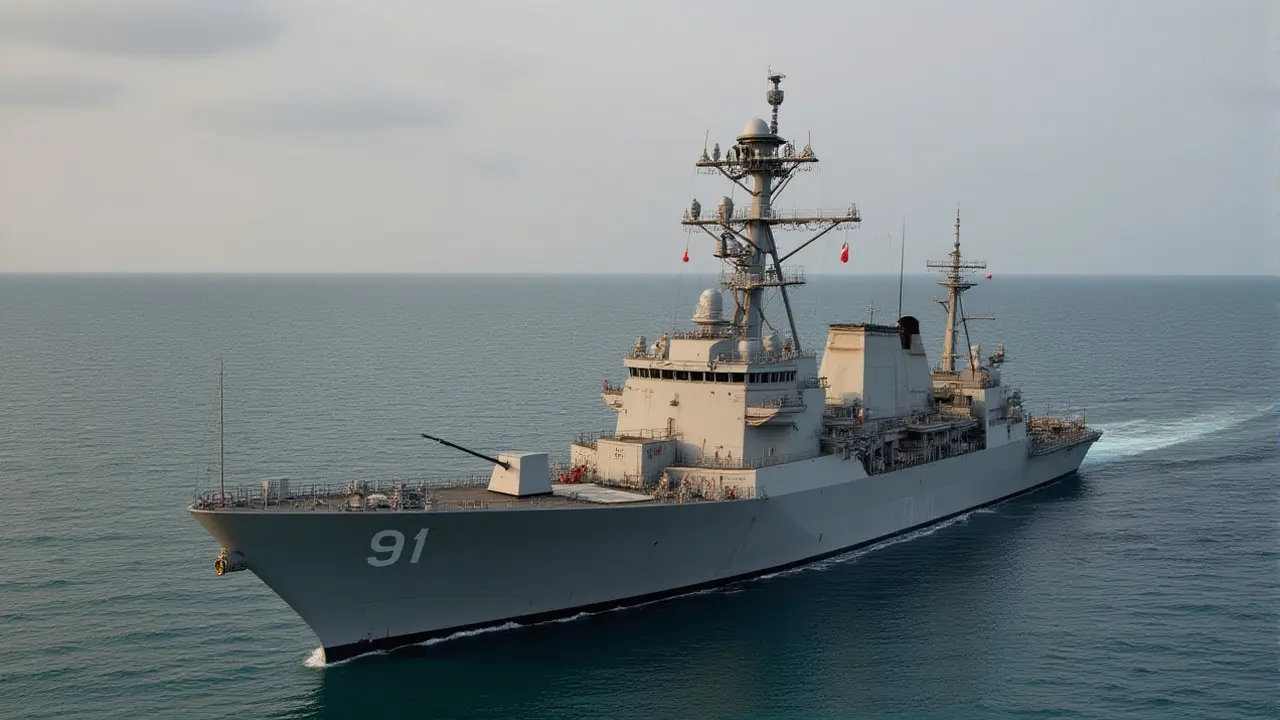
The diplomatic gloves are off. On May 14, 2026, Iran's delegation launched a blistering attack on the United States at the United Nations, accusing Washington of orchestrating a campaign of "piracy" against its vessels. The confrontation isn't just heated rhetoric; it's the verbal echo of a kinetic war unfolding in the waters below. With China and Russia vetoing a US-backed resolution, the Security Council is deadlocked, leaving the Strait of Hormuz as the primary battlefield for a conflict that threatens to choke off global energy supplies.
Here’s the thing: this isn’t your typical maritime dispute. It’s a full-scale naval blockade meeting a determined shadow fleet. The stakes? Trillions in oil trade and the potential for a wider regional war that could send gasoline prices skyrocketing overnight.
The Spark That Ignited the Crisis
The situation escalated from tense standoff to active combat on May 7, 2026. Iranian forces, utilizing a mix of Islamic Revolutionary Guard Corps (IRGC) missiles, drones, and fast-attack boats, targeted three American guided-missile destroyers transiting the strait toward the Gulf of Oman. It was a bold move, designed to test US resolve.
US Central Command (CENTCOM) didn’t hesitate. They reported intercepting and neutralizing the threats before launching retaliatory strikes on Iranian military facilities. The targets were precise: launch sites and bases in southern Iran, specifically hitting Qeshm Island, the strategic port of Bandar Abbas, and areas near Minab. In response, Iranian military officials declared their period of tolerance "over," warning that any further hits on Iran-linked tankers would trigger retaliation against US assets in the region.
A Dual Blockade Strategy
What we’re seeing now is what analysts call a "dual blockade." On one side, the US Navy is enforcing a strict maritime restriction zone. Since April 13, 2026, US forces have redirected 58 commercial vessels, preventing them from entering or leaving Iranian ports. Four vessels have been disabled entirely to ensure compliance.
On the other side, Iran’s Navy is attempting to restrict commercial traffic crossing the Hormuz, effectively turning the waterway into an economic weapon. Iranian officials claim control over the western section of the strait via the IRGC Navy, while regular naval forces dominate the eastern side. This split control creates a chaotic environment for international shipping, where escorts are needed just to keep broader traffic moving.
Specific incidents highlight the precision—and brutality—of the US enforcement. On May 8, the USS Bush fired munitions into the smokestacks of the M/T Sea Star III and M/T Sevda, disabling them before they could reach Iranian ports. Earlier, on May 6, the M/T Hasna was struck by F/A-18 Super Hornet jets, impairing its propulsion and steering. CENTCOM commander Adm. Brad Cooper stated, "US forces in the Middle East remain committed to full enforcement... Our highly trained men and women in uniform are doing incredible work."
Economic Fallout and Shadow Fleets
The economic damage is staggering. Reports indicate Iran is losing between $200 million and $500 million daily due to the blockade. But Tehran isn’t sitting idle. They’ve turned to "shadow fleets"—vessels that evade detection through distant maneuvers and false flags. Early in the enforcement phase, Tehran reportedly slipped more than 20 vessels through gaps in the net. Now, however, the pressure is mounting, and Iran has threatened to seize foreign vessels in retaliation.
This tactic underscores a grim reality: the Strait of Hormuz carries about 21% of the world’s total oil supply. Any prolonged disruption here doesn’t just hurt Iran’s economy; it destabilizes global markets. We’ve seen hints of this before during previous tensions, but the current scale of direct military engagement is unprecedented.
Geopolitical Deadlock
The UN confrontation reflects the broader geopolitical fracture. With China and Russia vetoing the US-backed resolution, there’s no multilateral mechanism to de-escalate the crisis. Iran argues that the maritime tensions are a direct result of the US-Israeli conflict, framing themselves as victims of Western coercion. Meanwhile, Iranian spokespersons warn that US power in the Middle East is nearing collapse, claiming that mounting regional pressure is weakening America’s military footprint in Gulf nations.
But wait—let’s look at the facts on the ground. The US maintains a robust presence, and its ability to disable key Iranian assets demonstrates significant operational capability. Yet, Iran’s willingness to risk escalation suggests they believe the political cost of continued US aggression outweighs the military risk.
What’s Next?
The coming weeks will be critical. Watch for two things: first, whether Iran attempts to mine the strait or target larger commercial tankers, which would force a massive US response. Second, monitor energy prices. If the blockade tightens further, expect volatility in crude oil futures that could ripple through every economy dependent on Middle Eastern fuel.
The details of future diplomatic moves are still unclear, but one thing is certain: the era of quiet tension is over. The Strait of Hormuz is now a live battlefield, and the world is holding its breath.
Frequently Asked Questions
How does the US blockade affect global oil prices?
The Strait of Hormuz handles roughly 21% of the world's oil supply. A sustained blockade or disruption can cause immediate spikes in crude oil prices, affecting gasoline costs globally. While alternative routes exist, they are less efficient and more expensive, leading to short-term market volatility and long-term supply chain adjustments.
Why did China and Russia veto the UN resolution?
China and Russia often oppose US-led initiatives in the Middle East to counter American influence. By vetoing the resolution, they signaled support for Iran’s sovereignty and rejected what they view as unilateral US military action. This veto leaves the UN unable to mediate, pushing the conflict into a bilateral military dynamic.
What are "shadow fleets" in this context?
Shadow fleets are ships used by sanctioned countries like Iran to bypass maritime restrictions. These vessels often turn off identification transponders, use false flags, or engage in ship-to-ship transfers in open waters. The US has struggled to track all of them, though recent precision strikes have begun to dismantle this network.
Is the Strait of Hormuz currently closed to all shipping?
No, the strait is not fully closed, but it is heavily restricted. The US enforces a blockade on vessels linked to Iran, while Iran attempts to restrict general traffic. Most international shipping continues under US escort or careful navigation, but delays and risks are significantly higher than normal.