
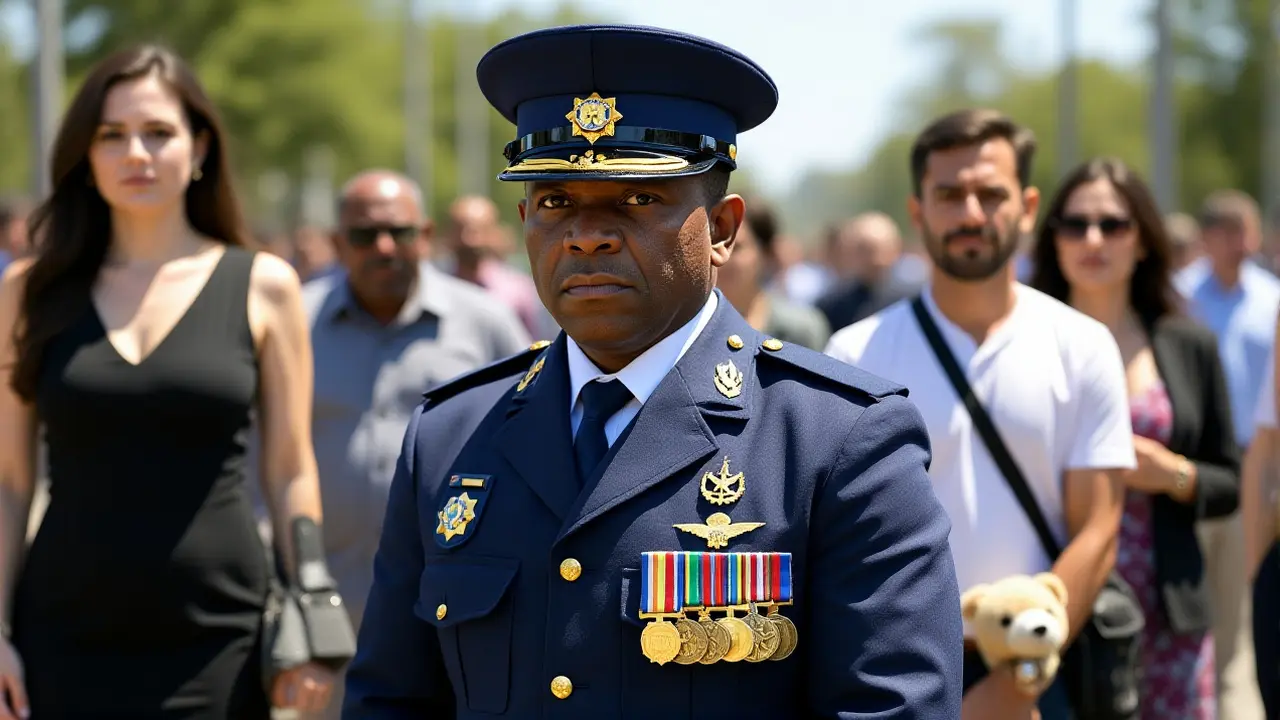
South Africa is bracing for a potentially volatile day on June 30, 2026, as the government cancels all police leave and deploys massive security forces nationwide. The move comes in response to planned anti-immigration demonstrations linked to a self-imposed deadline set by protest groups, raising fears of widespread unrest.
Acting Minister of Police Firoz Cachalia, Acting Minister of Police of South Africa has taken center stage in briefing the public, assuring citizens that the South African Police Service (SAPS) is ready to maintain order. With thousands of undocumented migrants reportedly fleeing urban centers and tensions rising, the stakes have never been higher.
A Zero-Tolerance Stance on Violence
Here’s the thing: the government isn’t waiting for chaos to unfold before acting. In a series of media briefings between June 22 and June 24, Cachalia made his position crystal clear. "Police will not wait for violence to erupt," he stated, emphasizing a proactive approach rather than a reactive one. This shift in strategy is significant, especially given the traumatic memory of previous unrest.
The message was consistent across platforms. Whether speaking at a briefing in Cape Town or addressing national media, Cachalia repeated that "violence will not be tolerated on June 30." It’s a hardline stance designed to deter potential agitators while reassuring ordinary citizens that safety is the priority. But does it work? History suggests otherwise.
The Human Cost: Migrants Fleeing Home
While officials prepare for the worst, the human impact is already visible. Thousands of undocumented migrants are leaving their homes, driven out by fear of the growing anti-migrant sentiment. These aren’t just statistics; they’re families packing up overnight, unsure if they’ll ever return. The atmosphere in townships like Nyanga is tense, with residents reporting heightened anxiety.
This exodus adds another layer of complexity to the situation. It’s not just about policing crowds; it’s about managing a humanitarian crisis unfolding in real-time. The "self-imposed deadline" of June 30 has become a focal point for frustration, anger, and fear, creating a powder keg that authorities are desperate to defuse.
Financial Implications and Historical Shadows
The economic toll could be staggering. Reports from Johannesburg indicate that the looming protests could cost South Africa up to R600 million. That’s R600,000,000 set aside for security operations and potential damage control. Yet, this figure pales in comparison to the scars of the past.
Recall the July 2021 unrest? More than 350 people died, thousands of businesses were looted or burned, and an estimated R50 billion in damage was recorded. President Cyril Ramaphosa, President of South Africa has personally acknowledged these failures, which is why the current preparations are so intense. No one wants a repeat of that devastation.
Inter-Ministerial Coordination and On-the-Ground Visits
Behind the scenes, coordination is key. Cachalia met with Defence Minister Angie Motshekga, Defence Minister to align strategies ahead of the deadline. This inter-ministerial collaboration ensures that both police and defense forces are synchronized in their response.
But it’s not just about high-level meetings. Cachalia has also hit the ground running, visiting the Nyanga Policing Precinct in Cape Town. This visit kicks off a tour of the top 50 high-priority crime stations, signaling a hands-on approach to identifying hotspots. It’s a move meant to boost morale among officers and show communities that leadership is present and engaged.
What Lies Ahead?
As we approach June 30, the question remains: will the heavy-handed preparation prevent violence, or provoke it? Civic organizations have denied plans for a total shutdown, but the mood on the streets tells a different story. Security forces are stepping up operations across all provinces, starting this week, to maintain order.
The coming days will be critical. If the government’s assurances hold true, South Africa may avoid another tragedy. But if tensions boil over, the consequences could be severe. For now, the nation watches and waits, hoping for peace amidst the uncertainty.
Frequently Asked Questions
Why is police leave cancelled in South Africa?
All police leave has been cancelled to ensure maximum staffing levels ahead of the planned anti-immigration protests on June 30, 2026. Acting Police Minister Firoz Cachalia announced this measure to guarantee that the South African Police Service (SAPS) can respond proactively to any potential violence or unrest across the country.
What is the June 30 deadline related to?
The June 30 deadline is a self-imposed date set by anti-illegal immigration groups and protesters. It serves as a focal point for demonstrations against undocumented migration, prompting widespread security concerns and leading to the evacuation of thousands of migrants from urban areas due to fears of targeted violence.
How much will the security operation cost?
Reports indicate that approximately R600 million (R600,000,000) has been set aside for the security operations and potential damage control associated with the June 30 protests. While Acting Minister Firoz Cachalia has confirmed the budget exists, specific breakdowns of how these funds will be allocated have not yet been publicly detailed.
Are there historical precedents for this level of unrest?
Yes, the current preparations are heavily influenced by the July 2021 unrest, which resulted in more than 350 deaths, thousands of looted businesses, and an estimated R50 billion in damages. The government aims to avoid a repeat of those events through proactive policing and inter-ministerial coordination involving Defence Minister Angie Motshekga.
Who is leading the security preparations?
Acting Minister of Police Firoz Cachalia is leading the security preparations, working closely with Defence Minister Angie Motshekga. He has visited high-priority crime stations, including Nyanga in Cape Town, and coordinated with national security forces to deploy resources across all provinces ahead of the June 30 deadline.
Roop Kaur
June 25, 2026 AT 22:12the entire narrative is a constructed illusion designed to mask the deeper systemic rot festering beneath the surface of this so-called democracy. when you look at the cancellation of leave, it is not merely about security; it is a psychological operation meant to instill fear and compliance among the populace. the government knows that by projecting an image of overwhelming force, they can deter dissent before it even begins to form. however, this approach ignores the root causes of the unrest, which are economic disparity and social exclusion. the migrants fleeing are not just statistics; they are victims of a global system that exploits their labor while denying them basic human rights. the anti-immigration rhetoric is a smokescreen used by political elites to distract from their own failures in governance. we must question why the state feels the need to militarize its police force against its own citizens. the historical precedent of 2021 is not just a memory; it is a warning of what happens when trust between the state and society collapses. the real conspiracy here is the deliberate manufacturing of crisis to justify increased surveillance and control. until we address these underlying issues, any amount of policing will only serve to exacerbate the tension. the people are waking up to the fact that the system is rigged against them.
Ankita Bajaj
June 27, 2026 AT 08:09we really need to focus on peace and understanding rather than letting fear drive our actions. everyone deserves to feel safe in their homes, whether they were born there or moved there for a better life. let's hope for a calm day where dialogue can replace violence and communities can come together instead of tearing each other apart.
Manish gupta
June 27, 2026 AT 08:41oh wow, another country collapsing under the weight of its own incompetence while the rest of us watch like it's a reality tv show. canceling police leave? brilliant strategy, truly. because nothing says 'trust us' like showing up with guns drawn and zero empathy. the whole thing is a circus, and the politicians are just clowns trying to keep the tent from falling down. meanwhile, the actual problems get ignored because it's easier to blame immigrants than fix the economy. laughable.
Sanjay Kumar
June 29, 2026 AT 06:36it is interesting to observe how societies react under pressure. the decision to cancel leave shows a lack of faith in the community's ability to self-regulate. perhaps if leaders focused more on building bridges and less on walls, the fear would dissipate naturally. true strength lies in unity, not in force.
Gaurav Jangid
June 30, 2026 AT 02:08OMG!! this is absolutely terrifying!!! my heart is pounding just reading about all the chaos!!! why does everything have to be so violent??? 😱😱😱 i cant even imagine what those families are going through right now!!! packing up their lives in seconds!!! it breaks my heart into a million pieces!!! 💔💔💔 please everyone stay safe!!! dont go out!!! lock your doors!!! the world is going crazy!!! 😭😭😭
Ghanshyam Gohel
June 30, 2026 AT 03:00It is imperative that we maintain order and respect the law!!! The authorities have taken necessary steps to ensure public safety!!! We must support these efforts!!! Any disruption is unacceptable!!! Let us stand together!!!
Nathan Lemon
July 1, 2026 AT 11:31The situation in South Africa reflects broader global challenges regarding migration and national identity. It is crucial to approach such matters with dignity and respect for all individuals involved. The government's response, while firm, must also be compassionate. Cultural diversity is a strength, not a weakness. We should encourage open dialogue and mutual understanding to resolve these tensions peacefully. History teaches us that oppression breeds resistance, whereas inclusion fosters stability. Let us hope for a resolution that honors human rights and social harmony.
Abhijit Pawar
July 1, 2026 AT 13:27Stop whining. Follow the rules. Stay home.
lavanya tolati
July 2, 2026 AT 16:58i feel so sad for the families who have to leave their homes suddenly. no one should live in fear like this. it is heartbreaking to see communities divided by hate and anger. we need more compassion in the world. please be kind to each other.
srinivasan sridharan
July 2, 2026 AT 23:47One might argue that the excessive preparation is a sign of confidence, yet it ironically highlights the deep-seated insecurity of the administration. The sarcasm is palpable when officials claim to prioritize safety while simultaneously treating every citizen as a potential threat. It is a classic case of overcompensation masking genuine failure. Perhaps if they spent half as much time addressing corruption as they do on protest management, the situation would be far less volatile. But then again, expecting competence from this level of bureaucracy is likely futile.
Anant Kamat
July 4, 2026 AT 16:02just chilling here watching the drama unfold. honestly seems like a lot of fuss over nothing but hey that's politics for you. hope nobody gets hurt though. vibes are pretty tense right now.